What AAC production needs
In aerated concrete the sand is wet-milled and reacts with lime and cement in the autoclave. Plants therefore look first at chemistry: silica (SiO2) content and impurities that disturb the reaction, such as clay, organic matter and sulfates.
Grading matters less than in ordinary concrete, because the sand goes to the mill anyway. What counts is cleanliness, steady quality and reliable supply all year.
What we know about our sand
From initial type testing (AG-CEL laboratory, report 20200916/582/19/01): fines 0.4 %, sand equivalent SE4 90, humus below the limit value, chloride 0.0071 %, alkali-silica reactivity grade 0. The sand is washed with river water during extraction, so it contains no clay.
To be clear: we do not have a chemical analysis yet, including SiO2 and sulfates, so we do not call it quartz sand. The test report also notes the presence of shells, which is worth checking for AAC.
- fines 0.4 % (f3), SE4 90
- chloride below 0.01 %, humus below the limit value
- no SiO2 analysis yet (to be tested by the plant)
- real production capacity up to about 2 million tonnes a year
How to check if it fits
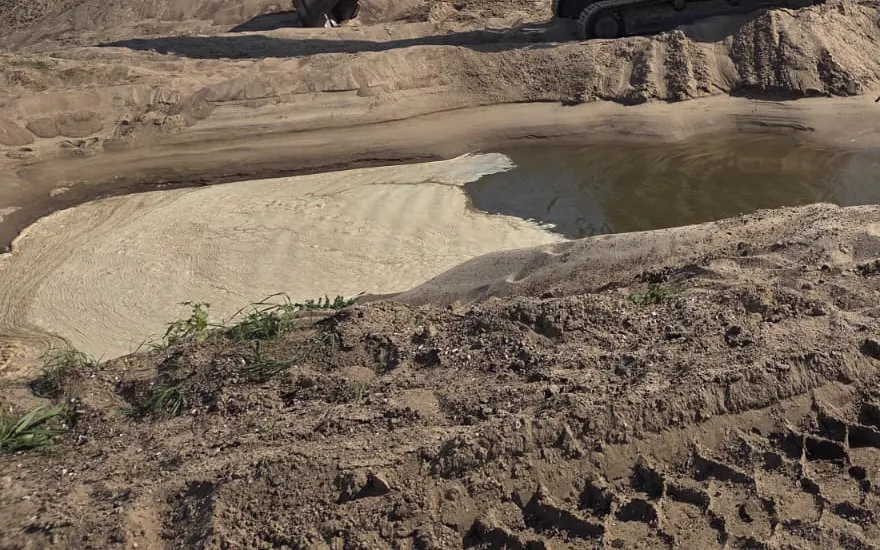
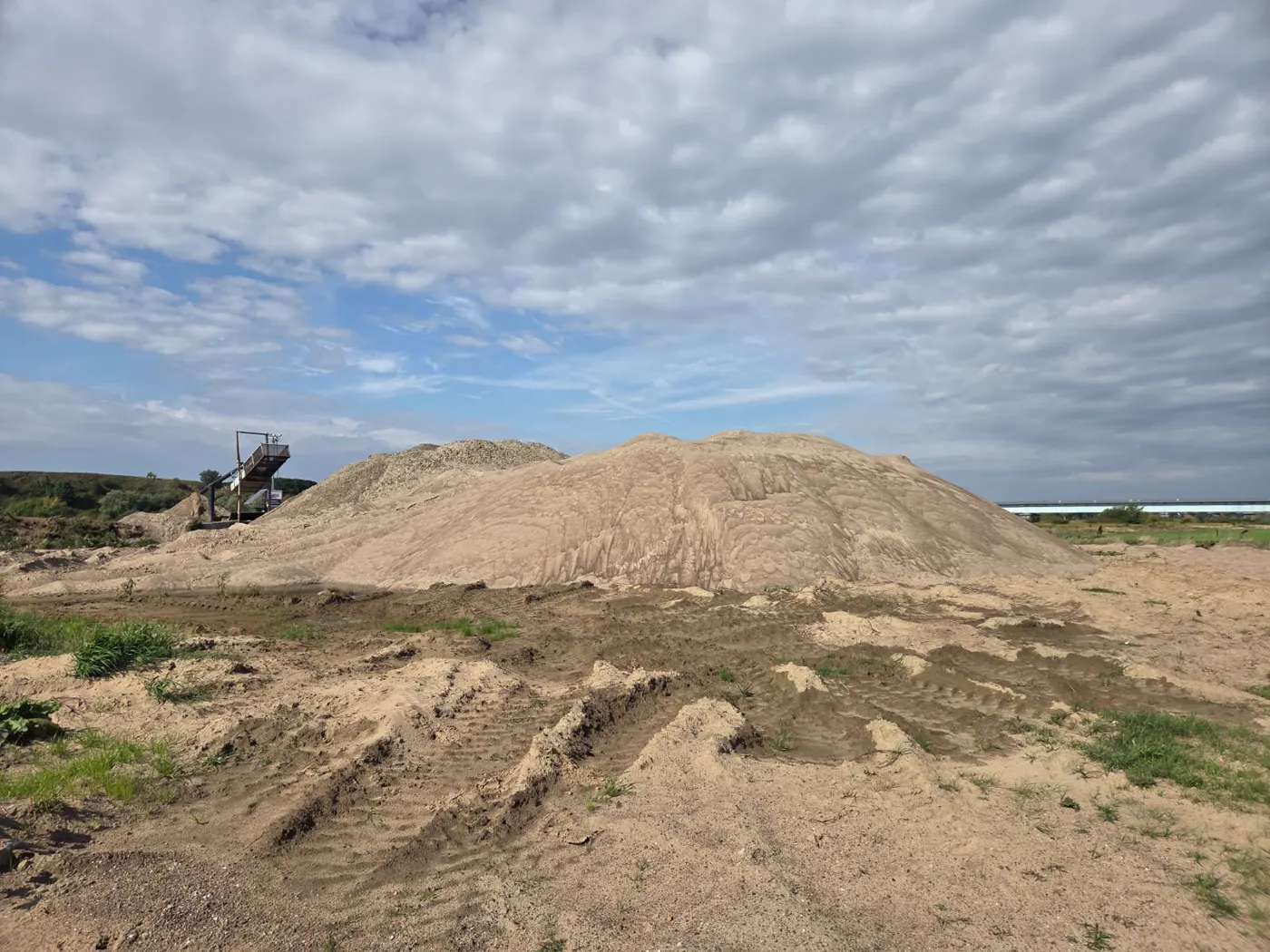
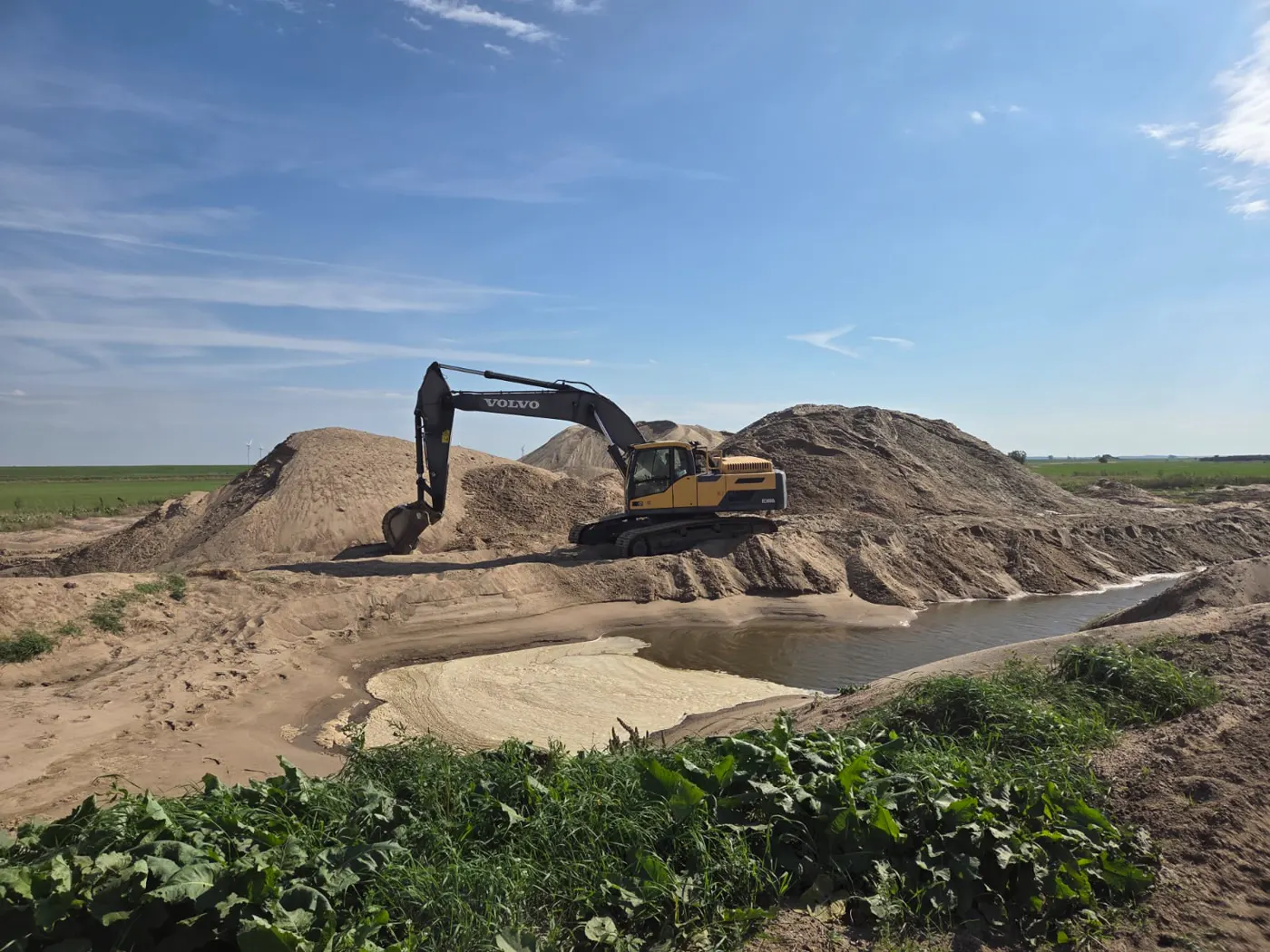
You are welcome to visit the pit and take material for testing in your own laboratory. If the results are good, we agree a trial lot and then an annual contract.
Price: PLN 30 per tonne net below 1,000 t, PLN 27 per tonne from 1,000 t, loading at the pit included. The buyer arranges transport, for example by truck to the Port of Gdansk and by ship from there.
Questions and answers
Is this quartz sand?
We do not claim that, because we have no SiO2 analysis yet. That is why we suggest testing it in your own laboratory first.
Do you supply dried sand?
No. The sand is moist, straight from the stockpile, in bulk. For AAC it is wet-milled anyway.
What volumes are possible?
Real production capacity is up to about 2 million tonnes a year; the current permit covers 500,000 tonnes a year. We are looking for buyers on long-term contracts.